Part One: ePortfolio Reflections
First Entry: 7/09/25
Second Entry: 03/11/25
I recently had the chance to dive into John Paynter’s thoughts on music education from the resource provided. It was fascinating to see how he emphasized the importance of creativity and personal expression in music. Paynter believed that music should be a platform for students to explore their unique ideas, much like other art forms. I found his perspective refreshing, especially when he argued that the teacher’s role should be more about facilitating this exploration rather than controlling it.
His insights into the child-centered approach resonated with me, as I recalled my own experiences in music classes where creativity was often stifled by rigid structures. Paynter’s idea of “leading out” from existing potential rather than just training students in technical skills made me reflect on how education can sometimes overlook the innate creativity in every child.
I appreciated how he encouraged teachers to embrace a workshop model, allowing students to work in small groups and engage in hands-on projects. This approach seemed to foster a more dynamic and engaging learning environment. Overall, Paynter’s vision for music education felt like a much-needed call to action, reminding me of the joy and freedom that music can bring when it’s rooted in personal expression.
Third Entry: 06/11/25
I found Carlos R. Abril’s article (great name btw) on culturally responsive teaching in music education to be quite enlightening. He explored how this approach differs from multicultural music education and emphasized the importance of understanding students’ cultural backgrounds. While visiting a fifth-grade music class focused on Peruvian music, I noticed the teacher’s efforts to engage her students through various activities, like singing and instrument-making. However, I questioned whether these activities truly reflected a culturally responsive teaching style.
Abril outlined key characteristics of culturally responsive teaching, which included recognizing students’ cultural heritages and fostering connections between their home and school experiences. He stressed that teachers should see their students as individuals and as part of a broader community. By creating a social learning environment, teachers could encourage collaboration and critical thinking about music.
The article also highlighted the need for teachers to select music and materials that resonate with their students’ experiences. Overall, I appreciated Abril’s insights on how music educators could better connect their teaching to the diverse cultural backgrounds of their students, ultimately enriching the learning experience for everyone involved.
Fourth Entry: 11/11/25
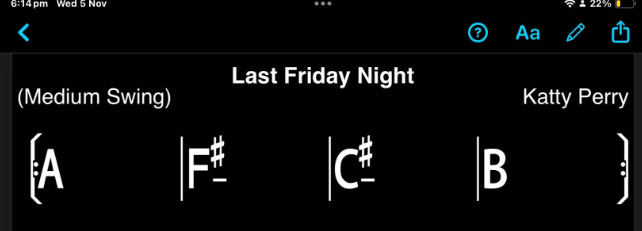
Creating a chordal chart for a song of your choice!
This week Tom gave us the challenge of creating an chordal chart using the software IRealPro. I decided to try and convert the main riff of Last Friday Night by Katy Perry. Although the app took a little bit of getting used to I eventually was able to create it as seen below.
 Journey Through Music Education